
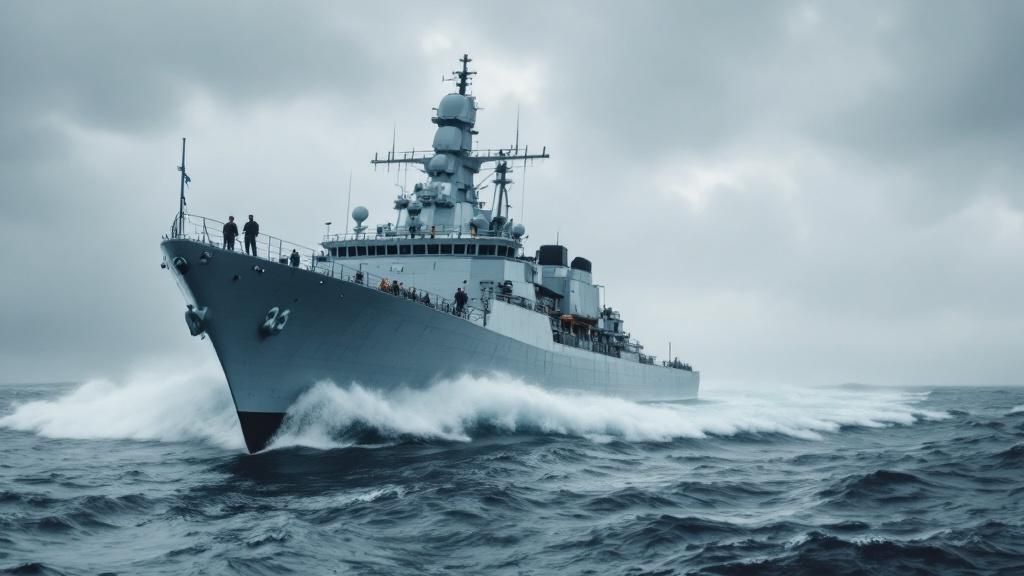
The Royal Navy is getting ready to board and detain Russian shadow fleet vessels operating in UK waters, after Prime Minister Sir Keir Starmer authorised military action against the ships. Russia has been operating vessels without proper flag registration to circumvent international sanctions and sustain financial support for its war in Ukraine. Ministers identified a lawful framework in January under the Sanctions and Money Laundering Act 2018 that permits forces to intercept and detain the sanctioned vessels. The government believes approximately 75 per cent of Russia’s crude oil is carried on older vessels in the shadow fleet, with 544 vessels thought to be involved in the operation. High-ranking ministers have confirmed that specialist military units have completed training for the operation, with the first boarding expected to occur imminently.
The Phantom Fleet Problem
Russia’s covert shipping network represents a complex system designed to evade sanctions that has enabled Moscow to maintain the export of crude oil whilst circumventing international restrictions intended to deprive its war machine of financial resources. These vessels, typically ageing tankers lacking valid national flags, have become critical to Russia’s capacity to fund its military campaign in Ukraine. The government estimates that roughly 75 per cent of Russian crude oil is shipped by these ships, highlighting the scale of the problem. With 544 vessels under sanctions designated as part of the shadow fleet, the difficulty confronting British forces is substantial and requires careful coordination with partner countries.
The complexity of tackling the shadow fleet extends beyond basic detection and interception. Royal Navy personnel have already supported neighbouring countries such as Finland, Sweden and Estonia with surveillance and tracking operations in recent weeks, demonstrating the international scope of the threat. Ship-tracking technology enables military planners to detect sanctioned vessels weeks before they arrive in UK waters, providing sufficient time for operational planning. However, the possibility of boarding vessels with potentially armed crews requires specialised instruction and preparation. Senior military units, including the Special Boat Service and Royal Marines, have conducted extensive wargaming exercises to prepare for various scenarios and levels of resistance they may encounter.
- Aging tankers operating without valid national flags circumvent sanctions
- Government estimates three-quarters of Russian oil relies on shadow fleet
- 544 prohibited vessels classified as part of the operation
- Ship-tracking systems locates vessels weeks before entering UK waters
Legal Foundation and Strategic Approach
The government’s capability to conduct military operations against sanctioned vessels rests upon a meticulously developed legal framework determined by government lawyers in the early part of this year. The Sanctions and Money Laundering Act of 2018 has been found to deliver the required legal means allowing the use of military force against ships in UK waters that contravene international sanctions frameworks. This statutory framework permits the Royal Navy and associated military units to board and apprehend ships without needing extra parliamentary authorisation for each separate operation. The establishment of this legal foundation represents a significant development, permitting ministers to advance with enforcement initiatives that would previously have faced significant legal challenges.
Defence officials and military planners have been operating in partnership to identify which sanctioned vessels will become the first targets for boarding operations. Ship-tracking technology delivers essential information, enabling authorities to monitor the movements of flagged vessels and predict their arrival in British waters with considerable accuracy. This advance warning allows operational teams to prepare thoroughly, liaising with intelligence agencies and ensuring that specialist units are positioned appropriately. The strategic approach prioritises methodical preparation rather than reactive responses, improving the chances of successful operations whilst lowering exposure to military personnel involved in the boarding procedures.
The Sanctions and Anti-Money Laundering Act
Government lawyers identified the 2018 Sanctions and Money Laundering Act as the statutory mechanism enabling military boarding operations against sanctioned vessels in UK territorial waters. This legislation provides the statutory authority necessary for armed forces to intercept and detain ships believed to be breaching international sanctions imposed upon Russia. The Act represents a previously untapped mechanism that allows for the enforcement of sanctions through military means rather than purely administrative or diplomatic channels. Its use against the shadow fleet illustrates how existing legislation may be modified to tackle contemporary security threats and sanctions evasion tactics.
The identification of this regulatory framework took place after comprehensive examination by legal advisers examining existing statutes and their applicability to illicit shipping operations. In the first half of this year, British armed forces assisted American troops in capturing the Marinera oil tanker, which had purportedly carried oil for Venezuela, Russia and Iran in breach of sanctions. This effective combined effort encouraged ministers to investigate how British forces could independently lead equivalent interventions against vessels under sanctions. The statutory framework now in place permits such operations to go ahead with legitimate government backing and global credibility.
Military Preparations and Training
Specialist military units have conducted comprehensive training operations in recent months to prepare for boarding procedures against shadow fleet vessels. These tactical simulations have centred on different potential situations, including engagement with armed personnel and resistance from ship personnel. The training schedule has been created to equip personnel with the strategic understanding and hands-on capabilities needed to perform secure and efficient boarding procedures in challenging maritime conditions. Senior defence officials have verified that this extensive preparation period is now complete, paving the way for operational deployments. The concentration of these operations has gone further than basic boarding techniques to encompass negotiation tactics, emergency medical procedures, and backup procedures for managing unexpected resistance or dangerous situations aboard the target ships.
The selection of units involved in shadow fleet operations will be determined by the anticipated level of opposition anticipated from crews aboard separate vessels. Military planners are using intelligence reports and vessel-specific intelligence to determine the appropriate force composition for each operation. The Special Boat Service, recognised for maritime specialist operations, and the Royal Marines, proficient in amphibious and boarding procedures, are both anticipated to participate in these missions. The flexible approach to troop deployment ensures that operations remain commensurate with assessed threats whilst maintaining operational efficiency. Government figures are keen to emphasise that personnel participating have received thorough preparation and have the expertise required to conduct these operations with safety and professionalism.
| Unit | Primary Role |
|---|---|
| Special Boat Service | Maritime specialist boarding operations |
| Royal Marines | Amphibious and boarding procedures |
| Royal Navy Personnel | Vessel monitoring and tracking support |
| Ministry of Defence Officials | Operational planning and coordination |
- Training scenarios include responses to armed personnel opposition and hazardous sea conditions.
- Unit assignment based on threat evaluations of specific ship threat profiles.
- Personnel possess proficiency with safe and professional boarding procedure execution.
International Cooperation and Broader Context
The British government’s choice to apprehend shadow fleet vessels constitutes a significant escalation in efforts to enforce global trade restrictions against Russia’s petroleum commerce. Royal Navy personnel have already provided crucial assistance with adjacent Scandinavian nations, including Finland, Sweden and Estonia, in surveillance and detection of questionable ships navigating through the North Sea and Baltic regions. This joint effort emphasises the shared commitment amongst Nordic European allies to disrupt Russia’s ability to circumvent sanctions imposed following its invasion of Ukraine, demonstrating that shadow fleet interception is not merely a British concern but a shared defence imperative.
Prime Minister Sir Keir Starmer’s timing in approving armed intervention coincides with his participation in the Joint Expeditionary Force summit in Helsinki, reflecting the administration’s resolve to keep attention on the Russian threat despite recent geopolitical developments in the Middle East. Ministers have emphasised that disrupting Russia’s shadow fleet operations will substantially reduce financial support for what Starmer termed “Putin’s war machine” and its “barbaric campaign” in Ukraine. The official assessment that roughly 75 per cent of Russian crude oil moves through ageing shadow fleet vessels demonstrates the strategic importance of these interdiction operations to the broader sanctions regime.
The Joint Expeditionary Force Operation
The JEF alliance consisting of military coalitions of northern European nations, delivers the institutional framework for coordinated action against illicit shipping activities. Starmer’s remarks at the JEF summit on Thursday is anticipated to emphasise Britain’s dedication to this multilateral approach whilst demonstrating the concrete measures implemented to enforce sanctions. The coalition’s collective naval capabilities and information exchange systems strengthen the effectiveness of locating and apprehending restricted shipping, ensuring that Russia cannot exploit gaps in monitoring coverage across European waters.
Political Importance and Resistance
The government’s commitment to launching military boarding operations constitutes a substantial increase in Britain’s approach to addressing Russian sanctions evasion, indicating the initial instance UK forces will physically stop vessels in home waters. The move carries substantial weight, illustrating the Prime Minister’s resolve to maintain pressure on Moscow notwithstanding conflicting crises demanding ministerial attention. By authorising these operations, the government signals to partners and opponents alike that Britain continues committed to enforcing the worldwide sanctions regime, strengthening its role as a key voice in leading Western actions against Russian actions in Ukraine.
However, the authorisation of military boarding operations has not been without scrutiny. BBC Verify’s analysis posed concerns about the efficacy of current legal frameworks, highlighting that numerous sanctioned ships had navigated the English Channel in the weeks after the identification of the Sanctions and Money Laundering Act as the statutory foundation for intervention. Commentators have challenged whether the government’s approach sufficiently tackles the extent of shadow fleet activity, with some arguing that more robust international coordination and stronger enforcement mechanisms may be necessary to effectively undermine Russia’s oil trade and deprive its military operations of essential income.
